The global market for vaping products, and consequently the electronic cigarette price landscape, has experienced exponential growth in recent years. Driven by factors like the desire for alternatives to traditional tobacco, increasing disposable income in emerging economies, and innovative product development, the industry has become a multi-billion dollar market. Understanding the nuances of electronic cigarette pricing is crucial for both consumers and businesses, influencing purchasing decisions and impacting market share.
Fluctuations in electronic cigarette price are influenced by a complex interplay of factors, including raw material costs (nicotine, propylene glycol, vegetable glycerin), manufacturing processes, regulatory compliance, and distribution networks. The competitive nature of the industry also plays a significant role, with manufacturers constantly adjusting prices to gain an edge. This dynamic market requires consistent monitoring and analysis.
The demand for vaping products continues to surge globally, presenting both opportunities and challenges. Access to affordable, quality vaping products, reflected in a reasonable electronic cigarette price, is central to consumer satisfaction and sustainable market growth. Analyzing pricing trends is vital for predicting future market direction and making informed business decisions.
Understanding the Factors Influencing Electronic Cigarette Price
The electronic cigarette price isn't determined in a vacuum; several key factors converge to establish the final cost to the consumer. These include the cost of components – nicotine, e-liquid ingredients, batteries, heating elements, and packaging – all subject to supply chain dynamics and raw material availability. Manufacturing costs, encompassing labor, overhead, and quality control, are also substantial contributors to the final price.
Beyond production, regulatory compliance significantly impacts pricing. Excise taxes, licensing fees, and adherence to evolving safety standards all add to the cost base. Furthermore, marketing and distribution channels, from online retail to brick-and-mortar stores, influence the price point offered to end-users. Understanding these interconnected factors is essential for businesses and consumers alike.
The Global Landscape of Electronic Cigarette Pricing
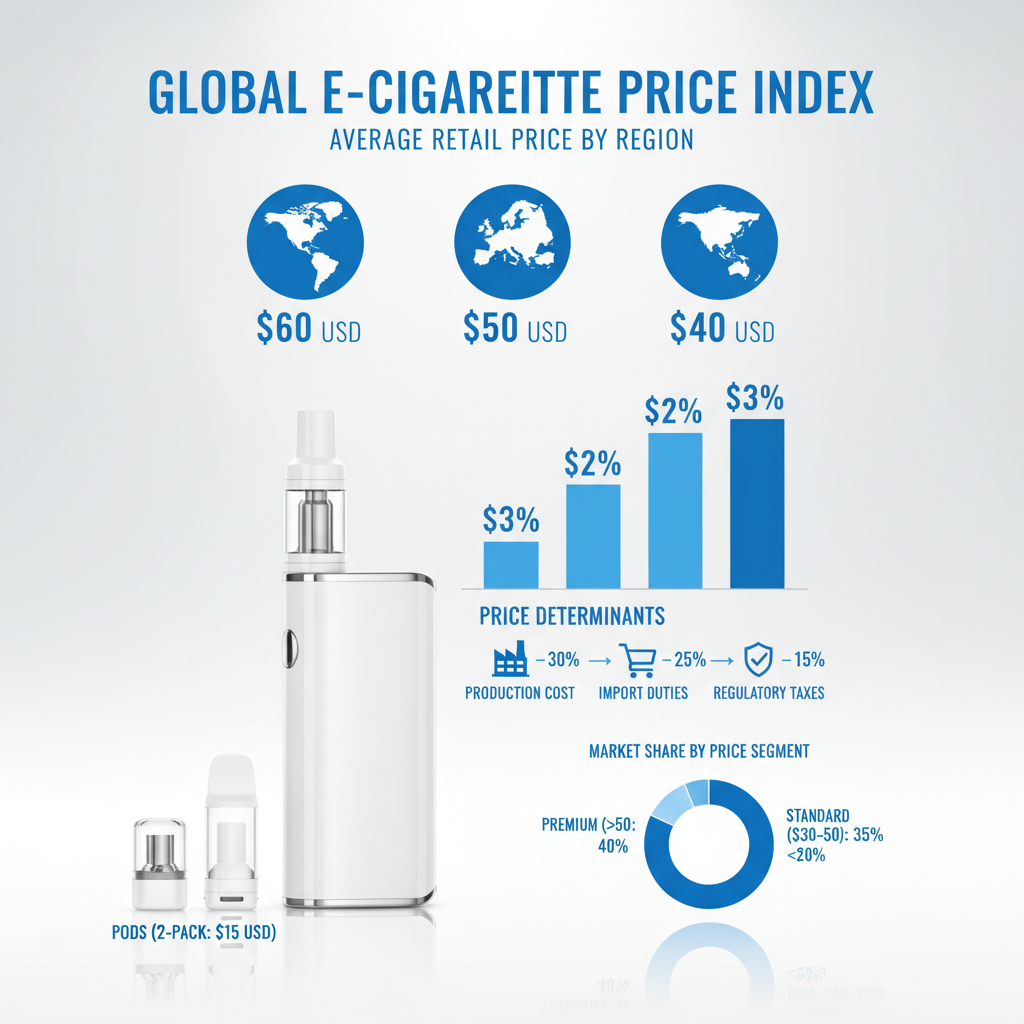
The electronic cigarette price varies considerably across the globe, reflecting differences in economic conditions, regulatory environments, and consumer preferences. Countries with higher excise taxes on vaping products, such as those in Europe and Australia, typically exhibit significantly higher retail prices compared to regions with more lenient regulations. Exchange rate fluctuations also play a crucial role, impacting the cost of imported components and finished goods.
Emerging markets, particularly in Asia and South America, often see lower electronic cigarette price points due to lower labor costs and less stringent regulatory requirements. However, this can sometimes correlate with a lower perceived quality and a higher risk of counterfeit products. The competitive intensity within each market also drives price competition, influencing the overall price landscape.
Analyzing global pricing trends reveals a clear correlation between regulation and cost. Heavily regulated markets tend to have higher prices, while less regulated markets are more price-sensitive. This dynamic necessitates a nuanced approach to pricing strategies, considering both local market conditions and broader global trends.
Defining Electronic Cigarette Price: Components and Variations
The term "electronic cigarette price" encompasses more than just the cost of the device itself. It’s a composite of several elements, including the hardware (battery, atomizer, tank), the e-liquid (nicotine concentration, flavor profile), and any associated accessories (coils, chargers). Different types of vaping devices – pod systems, vape pens, box mods – inherently have varying price points, reflecting their complexity and feature sets.
Variations in e-liquid formulations also contribute to price differences. Premium e-liquids, crafted with high-quality ingredients and unique flavor blends, typically command higher prices than standard options. Nicotine strength is another pricing factor, as higher nicotine concentrations often translate to a slightly increased cost. The packaging and branding also influence the perceived value and, consequently, the price.
Furthermore, disposable vape devices are often priced differently than refillable systems, owing to the integrated nature of their design and the lack of ongoing maintenance costs. Understanding these components allows consumers to make informed purchasing decisions and assess the true value of different products in relation to their individual needs and preferences.
Key Drivers of Electronic Cigarette Price Fluctuations
Several key drivers contribute to the fluctuations observed in electronic cigarette price. One significant factor is the cost of raw materials, particularly nicotine, which is subject to seasonal variations and global demand. Supply chain disruptions, whether due to geopolitical events or natural disasters, can also significantly impact material costs and subsequently influence pricing.
Regulatory changes play a pivotal role. The introduction of new taxes, restrictions on advertising, or stricter manufacturing standards often leads to price increases. Competition among manufacturers also exerts a strong influence. Intense competition can drive down prices, while limited competition may allow companies to maintain higher margins.
Comparison of Electronic Cigarette Price Factors
Regional Variations in Electronic Cigarette Price
Significant regional variations exist in the electronic cigarette price. North America, for example, tends to have relatively moderate prices, influenced by a mix of state-level regulations and competitive market dynamics. Europe, however, often experiences higher prices due to stricter regulations and higher excise taxes.
Asia presents a more fragmented picture. Countries like Japan and South Korea, with higher incomes and stricter regulations, have comparatively higher prices. Conversely, countries like China and Vietnam often see lower prices due to lower production costs and less stringent regulations. The Middle East and Africa exhibit a wide range of pricing, dependent on individual country policies and economic conditions.
The Long-Term Value Proposition of Optimized Electronic Cigarette Price
Optimizing the electronic cigarette price isn’t merely about being the cheapest option; it's about delivering the best value for money. This includes considering factors like product quality, longevity, performance, and customer support. A slightly higher price point can be justified if the product offers superior reliability, flavor, or user experience.
Offering competitive pricing can attract new customers, build brand loyalty, and drive long-term growth. Transparent pricing practices – clearly communicating the components of the cost and avoiding hidden fees – can foster trust and enhance the customer experience. Focusing on customer value is a sustainable strategy for achieving long-term success in the vaping market.
Ultimately, a well-considered electronic cigarette price strategy considers both profitability and customer satisfaction, balancing cost efficiency with perceived value.
Future Trends and Innovations in Electronic Cigarette Price Management
The future of electronic cigarette price management is likely to be shaped by several key trends. Increased automation in manufacturing processes could lead to lower production costs and potentially reduced prices. The development of more efficient battery technologies and e-liquid formulations could also contribute to cost savings.
The rise of direct-to-consumer (DTC) sales models allows manufacturers to bypass traditional retail markups, offering potentially lower prices directly to consumers. Furthermore, advancements in data analytics and dynamic pricing algorithms could enable companies to optimize pricing strategies in real-time, responding to changes in demand and competition.
Sustainable sourcing of raw materials and eco-friendly packaging are also emerging trends that may influence pricing, as consumers increasingly prioritize environmentally responsible products. The integration of blockchain technology could enhance supply chain transparency and potentially reduce the risk of counterfeit products, further impacting price stability.
Summary Table of Future Trends Impacting Electronic Cigarette Price
| Trend |
Potential Impact on Price |
Implementation Difficulty (1-10) |
Long-Term Sustainability |
| Automation of Manufacturing |
Reduced Production Costs, Lower Prices |
7 |
High |
| Direct-to-Consumer Sales |
Bypassing Retail Markups, Competitive Pricing |
5 |
Medium |
| Dynamic Pricing Algorithms |
Real-Time Price Optimization, Increased Profitability |
8 |
Medium |
| Sustainable Sourcing |
Potential for Higher Costs, Premium Pricing |
6 |
High |
| Blockchain for Supply Chain |
Reduced Counterfeiting, Price Stability |
9 |
Medium |
| Advanced Battery Technology |
Improved Efficiency, Lower Long-Term Costs |
7 |
High |
FAQS
The electronic cigarette price is significantly affected by raw material costs (nicotine, PG/VG), manufacturing location and efficiency, regulatory compliance (taxes, permits), and brand positioning. Competition within specific markets also plays a large role, as does the complexity of the device itself and its features. Furthermore, distribution channels and marketing expenses can influence the final price point.
Excise taxes on vaping products vary dramatically across countries, significantly impacting the electronic cigarette price. Countries with high tax rates, like many in Europe, often have substantially higher retail prices than those with lower or no taxes. These taxes are frequently implemented as a public health measure to discourage vaping, but they also create a price disparity that can fuel black markets.
Not necessarily. While a higher electronic cigarette price can sometimes reflect better build quality, advanced features, or premium ingredients, it’s not always a guarantee of superior performance or safety. Marketing and branding can also inflate prices. Consumers should research product specifications, read reviews, and consider factors beyond price to assess quality.
Consumers can find better deals by comparing prices across multiple retailers, looking for online promotions and discounts, and subscribing to newsletters for exclusive offers. Considering bulk purchases (where applicable) can also lead to cost savings. Researching different brands and models to find the best value for their needs is also important.
Disposable vape devices are increasingly impacting electronic cigarette price trends. They are typically cheaper upfront but can be more expensive over time compared to refillable systems. Their affordability has increased market accessibility, but also raises concerns about environmental impact and potential for underage use. They also force manufacturers of reusable devices to remain competitive on price.
Manufacturers employ various strategies, including streamlining supply chains, optimizing manufacturing processes, utilizing economies of scale, and focusing on efficient product design. Investing in automation and exploring alternative materials can also help reduce costs without compromising quality. Direct-to-consumer sales and strategic partnerships can further enhance cost competitiveness.
Conclusion
In conclusion, the electronic cigarette price is a dynamic and multifaceted issue influenced by a complex interplay of factors, ranging from raw material costs and regulatory compliance to market competition and consumer preferences. Understanding these nuances is critical for both businesses and consumers seeking to navigate this evolving market effectively. A focus on value, transparency, and sustainability is paramount for long-term success.
Looking ahead, the future of electronic cigarette pricing will likely be shaped by technological innovations, evolving regulations, and growing consumer awareness. By embracing data-driven insights, prioritizing responsible practices, and adapting to changing market conditions, stakeholders can unlock opportunities for growth and ensure the continued accessibility of vaping products for adult consumers. Visit our website: www.sxzpods.com