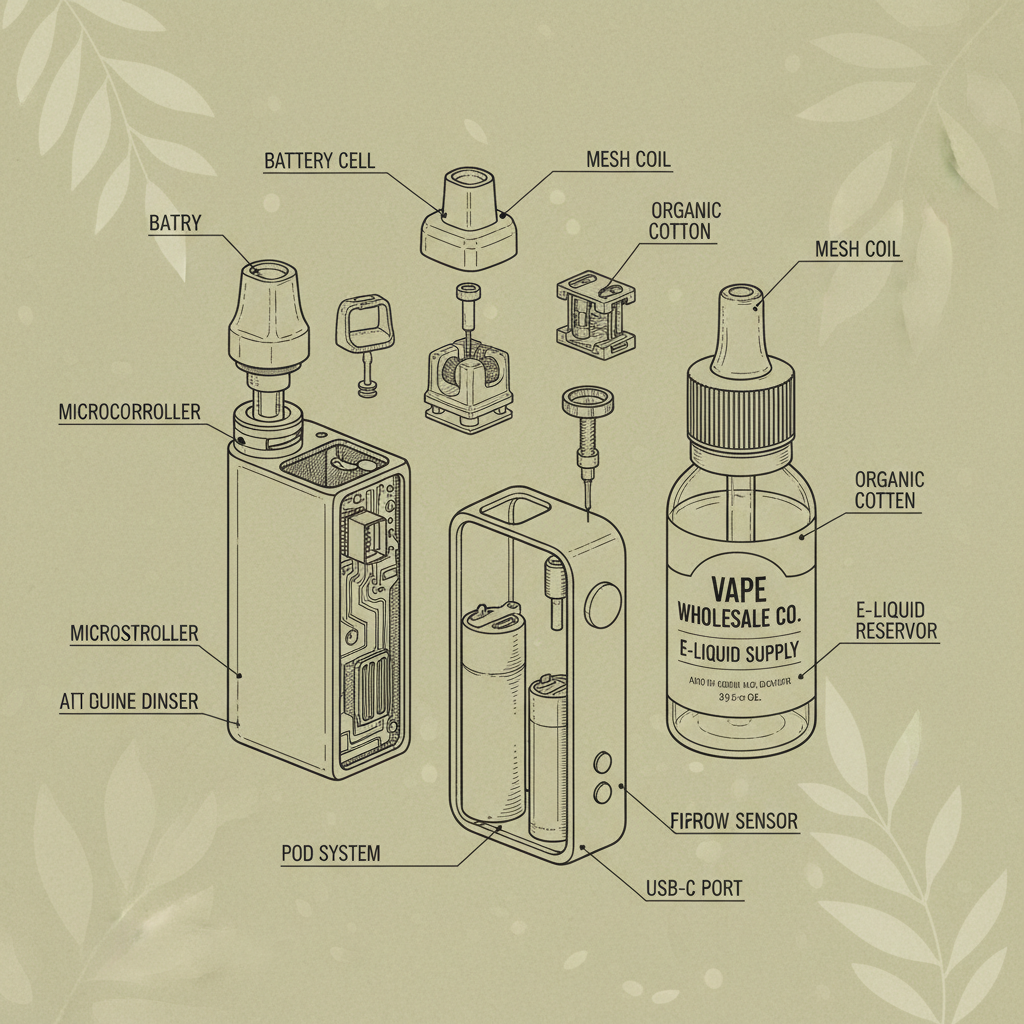
The landscape of modern consumer goods is constantly shifting, and the role of specialized vape manufacturers has become increasingly pivotal in defining the standards of quality and innovation. As global demand for sophisticated delivery systems grows, the focus has shifted from simple functionality to a marriage of engineering and sensory experience. Understanding the machinery and chemistry behind these products is essential for businesses looking to scale in a highly competitive international market.
From a global perspective, the industry is navigating a complex web of regulatory frameworks and technological leaps. Major industrial hubs are now integrating automated precision manufacturing to ensure consistency, which is the primary challenge facing smaller-scale producers. By leveraging ISO-certified processes, the top players in the field are transforming how these devices are perceived, moving them from niche gadgets to precision-engineered consumer electronics.
Navigating the complexities of sourcing and production requires a deep understanding of how vape manufacturers operate across different jurisdictions. Whether it is ensuring the purity of e-liquids or the durability of the heating elements, the synergy between hardware and chemistry is what drives long-term commercial success.
The Industrial Evolution of Vape Manufacturers
The journey of vape manufacturers has been marked by a rapid transition from artisanal, small-batch assembly to massive, high-tech industrialization. In the early stages, the focus was primarily on experimentation with coils and batteries, but today's industry requires a holistic approach to product design, including ergonomic housing and advanced chipset integration.
This evolution is driven by a need for scalability and reliability. Modern facilities now employ clean-room environments and robotic assembly lines to eliminate human error, ensuring that every unit coming off the belt meets rigorous safety specifications before hitting the global market.
Core Manufacturing Standards and Quality Control
Quality control is the bedrock upon which reputable producers build their brand equity. For leading factories, this involves a multi-stage verification process, starting from the raw material inspection of food-grade plastics and medical-grade stainless steel to the final leak-testing of the atomizer.
Strict adherence to international standards, such as ISO 9001, allows these entities to maintain a competitive edge by reducing the rate of defective units. The implementation of Statistical Process Control (SPC) helps in identifying deviations in real-time, allowing for immediate adjustments in the production cycle.
Moreover, the integration of comprehensive testing protocols—including stress tests for battery longevity and thermal analysis for coil heating—ensures that the end consumer receives a product that is not only effective but inherently safe for daily use.
Technological Integration in Production Lines
The adoption of Industry 4.0 has fundamentally changed how vape manufacturers manage their output. By integrating IoT sensors across the assembly line, managers can monitor the precise temperature and pressure of injection molding machines, ensuring that the casing of each device is flawless.
Automation is no longer an option but a necessity for vape manufacturers who wish to remain viable. The use of AI-driven optical inspection systems allows for the detection of microscopic cracks or misaligned components that would be invisible to the human eye, significantly elevating the overall yield.
Beyond the hardware, digital twins are being used to simulate product performance before a physical prototype is even created. This reduces the research and development cycle, allowing for faster iteration and the quicker launch of innovative features into the consumer marketplace.
Performance Metrics for Production Efficiency
Evaluating the success of a production facility requires a data-driven approach. Key Performance Indicators (KPIs) such as Overall Equipment Effectiveness (OEE) and First Pass Yield (FPY) are used to benchmark the efficiency of the manufacturing process.
By analyzing these metrics, companies can identify bottlenecks in the assembly process and implement lean manufacturing principles to eliminate waste, thereby lowering the cost per unit without sacrificing the quality of the final product.
Production Efficiency Analysis by Manufacturer Type
Global Market Applications and Reach
The reach of high-capacity production facilities extends across multiple continents, with major logistics hubs in Asia and Europe facilitating rapid distribution. This global network allows for the customization of products to meet regional taste preferences and local regulatory requirements, such as specific wattage limits or ingredient bans.
In emerging markets, the focus is often on affordability and durability. Consequently, manufacturers are developing tiered product lines that range from budget-friendly entry-level devices to high-end, luxury models that utilize premium materials like aerospace-grade aluminum and genuine leather.
Long-term Value and Sustainability Goals
Sustainability has moved to the forefront of the industrial agenda. The industry is currently grappling with the environmental impact of disposable components, leading to a surge in the development of biodegradable materials and recyclable battery systems.
By investing in "green" manufacturing, companies are not only reducing their carbon footprint but also appealing to a more environmentally conscious demographic. This transition involves optimizing the supply chain to reduce transport emissions and adopting energy-efficient machinery in the factory.
The long-term value for stakeholders lies in the creation of a circular economy, where old devices can be returned and refurbished, reducing the reliance on virgin plastics and rare earth metals.
Future Trends in Device Innovation
Looking ahead, the integration of smart technology is set to redefine the user experience. We are seeing the rise of app-connected devices that allow users to track their usage patterns, customize heat settings with precision, and receive alerts for coil replacement.
Material science is also playing a huge role, with the introduction of ceramic heating elements that offer a purer taste and longer lifespan than traditional cotton-based coils. These innovations are pushing the boundaries of what was previously thought possible in compact hardware.
Furthermore, the shift toward more modular designs ensures that devices can be upgraded without needing a total replacement, aligning the industry with broader trends of longevity and waste reduction.
Comparative Analysis of Future Manufacturing Technologies
| Technology Type |
Implementation Cost |
Efficiency Gain |
Sustainability Score |
| AI-Optical Sorting |
High |
9/10 |
7/10 |
| Biodegradable Polymers |
Medium |
6/10 |
10/10 |
| Ceramic Coil Tech |
Medium |
8/10 |
8/10 |
| Modular Assembly |
Low |
7/10 |
9/10 |
| IoT Monitoring |
High |
10/10 |
6/10 |
| 3D Printed Housings |
Medium |
5/10 |
7/10 |
FAQS
Safety is ensured through a combination of rigorous material sourcing and multi-stage testing. This includes using medical-grade components, performing strict leak tests, and conducting battery stress tests to prevent overheating. Most top-tier facilities also adhere to ISO and GMP standards to maintain a sterile and controlled production environment.
Lead times vary depending on the complexity of the design and the order volume. Typically, standard OEM orders take between 30 to 60 days, while completely custom designs involving new molds and chipset programming can take 90 to 120 days. Efficient manufacturers use ERP systems to streamline these timelines.
Yes, most professional manufacturers offer tiered customization. This can range from simple aesthetic changes (colors, logos) to deeper hardware modifications, such as adjusting the wattage, changing the coil material (e.g., switching to ceramic), or integrating specific sensors for a more tailored user experience.
The industry is shifting toward sustainability by implementing closed-loop water systems in factories, utilizing recycled aluminum for casings, and developing biodegradable plastics. Many are also focusing on modular designs that allow users to replace only the worn-out parts rather than discarding the entire device.
Key certifications include ISO 9001 for quality management, ISO 14001 for environmental management, and CE or RoHS certifications for electronic safety and hazardous substance restriction. These ensure that the partner meets international standards for quality, safety, and legality.
Manufacturers employ regulatory experts to ensure that products meet the specific laws of the destination country. This includes adjusting nicotine concentrations, implementing child-resistant packaging, and adding required health warnings to labels, ensuring a smooth customs process.
Conclusion
The success of any venture in this space depends heavily on the technical capability and ethical standards of the chosen production partner. By focusing on a synergy of automated precision, strict quality control, and a commitment to sustainable materials, the industry is moving toward a more mature and professional era. The transition from basic gadgets to high-performance consumer electronics is well underway, driven by continuous innovation in both hardware and chemical formulation.
As we look toward the future, the integration of smart technology and circular economy principles will likely separate the market leaders from the obsolete. Businesses that prioritize long-term reliability and environmental responsibility over short-term gains will be the ones to thrive. For those seeking a partner that embodies these values of precision and innovation, we invite you to explore our solutions. Visit our website: www.sxzpodss.com