Understanding the diverse array of perfume types is more than just a lesson in fragrance; it is an exploration of chemistry, art, and personal identity. In the global luxury and personal care market, the ability to distinguish between various concentrations and scent families allows consumers to align their olfactory presence with their professional and social environments, enhancing confidence and perceived prestige.
From a global industrial perspective, the classification of fragrances has evolved from simple essential oil blends to complex synthetic and natural compositions. This diversification is driven by a growing consumer demand for longevity, sustainability, and niche experiences, pushing manufacturers to refine the precision of their aromatic formulations to meet specific cultural preferences across different continents.
Whether you are a connoisseur looking for a signature scent or a business professional navigating the retail landscape, mastering the nuances of different fragrance categories is essential. By understanding how volatility and oil concentration impact the sillage and longevity of a scent, you can make informed decisions that maximize value and sensory impact.
Understanding Concentration Levels in Perfume Types
The primary distinction between various perfume types lies in the concentration of fragrance oils dissolved in alcohol and water. At the top of the spectrum is Parfum (Extrait), which contains the highest concentration of oils (typically 20-40%), offering the longest duration on the skin and a more intimate scent profile that lingers for 24 hours or more.
Conversely, Eau de Cologne and Eau Fraiche occupy the lower end of the concentration scale, often ranging from 1% to 5%. These types are designed for refreshing applications, providing a burst of energy that evaporates quickly, making them ideal for athletic settings or high-temperature climates where a heavy scent would be overwhelming.
The Olfactory Pyramid and Scent Families
Every professional fragrance is structured as an olfactory pyramid, consisting of top, middle, and base notes. The top notes are the first impressions, typically citrus or light fruits, which evaporate quickly. The heart notes emerge as the top notes fade, providing the core character of the scent, while the base notes—often musk, vanilla, or sandalwood—provide the foundation and longevity.
Beyond structure, perfume types are categorized into families such as Floral, Oriental, Woody, and Fresh. Floral scents are timeless and romantic, often utilizing rose or jasmine; Woody types offer an earthy, grounded feel using cedar or vetiver; and Oriental scents bring warmth and spice through amber and cinnamon.
The modern industry has seen a rise in "Gourmand" scents, which mimic edible aromas like chocolate, honey, or caramel. This trend reflects a psychological shift toward comfort and nostalgia, blending traditional perfumery with a desire for "delicious" scents that evoke warmth and security in the wearer.
Industrial Production and Ingredient Sourcing
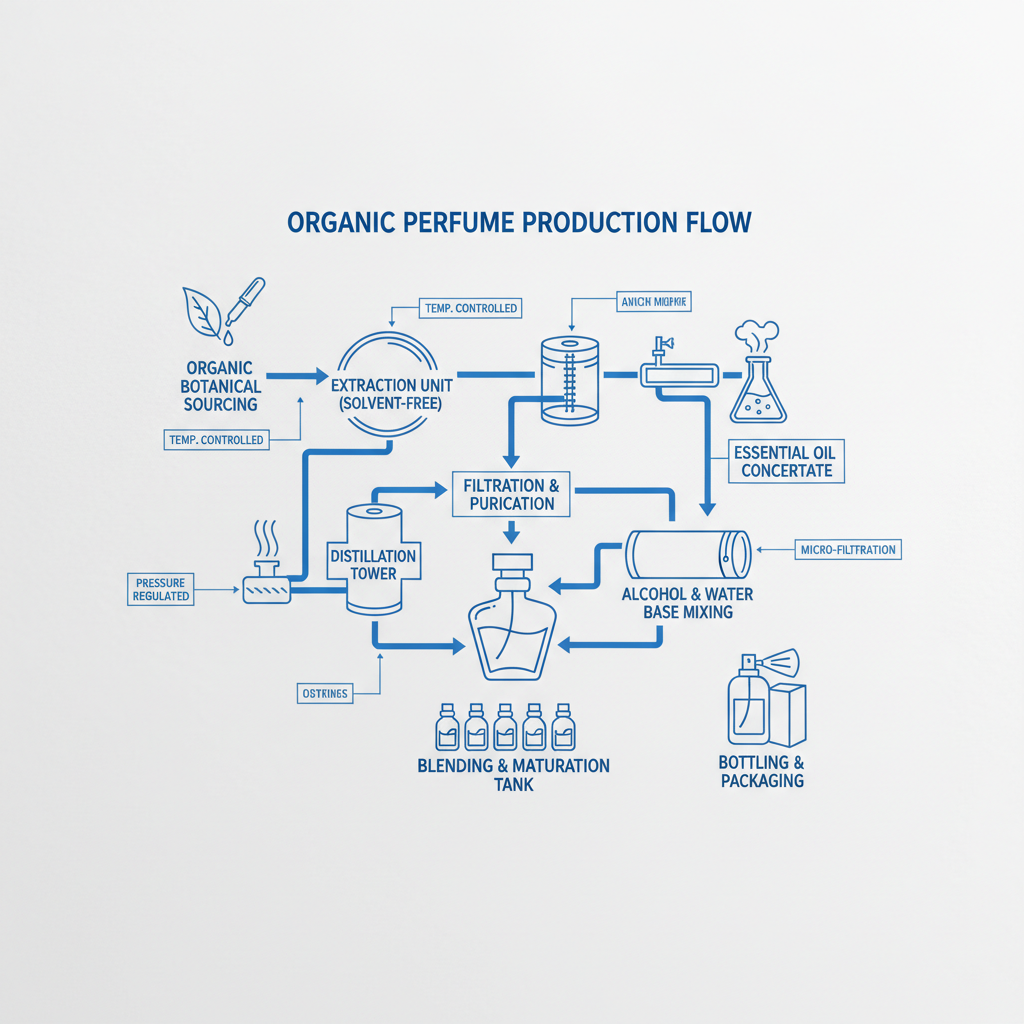
The manufacturing of various perfume types relies on a sophisticated supply chain that blends traditional agriculture with cutting-edge organic chemistry. Natural extracts are sourced from specific geographic regions—such as Grasse in France or the jasmine fields of India—to ensure the authenticity and purity of the raw materials.
Technological advancements in solvent extraction and CO2 supercritical extraction have allowed perfumers to capture a more accurate "snapshot" of a flower's scent than traditional steam distillation. This precision is critical when developing high-end perfume types that require a hyper-realistic olfactory profile to justify their luxury pricing.
Furthermore, the industry is increasingly integrating synthetic molecules (aroma chemicals) to protect endangered species. For example, synthetic oud or sandalwood is used to prevent over-harvesting of rare trees, ensuring that the global supply of diverse perfume types remains sustainable without compromising the sensory experience.
Performance Metrics: Longevity and Sillage
When evaluating perfume types, two technical terms are paramount: longevity and sillage. Longevity refers to how long the scent remains detectable on the skin, which is directly proportional to the concentration of base notes. Sillage, derived from the French word for "wake," describes the trail left by the perfume as the wearer moves through a space.
A high-sillage fragrance is often designed for social prominence, whereas a low-sillage "skin scent" is preferred for professional environments like hospitals or corporate offices. Balancing these two factors is the hallmark of a well-engineered fragrance, ensuring the scent is present without being intrusive.
Comparison of Performance by Perfume Types
Application Scenarios for Different Fragrances
Choosing the right fragrance depends heavily on the context of the occasion. For formal evening events, deep and rich perfume types like Eau de Parfum (EDP) with oud, amber, or heavy florals are ideal, as they complement the sophistication of the environment and persist through the night.
In contrast, for a daytime office setting, light and airy types such as Eau de Toilette (EDT) with citrus or "clean linen" notes are more appropriate. These provide a sense of freshness and hygiene without overwhelming colleagues in confined spaces, maintaining a professional and unobtrusive presence.
Sustainable Innovations in Modern Perfumery
The fragrance industry is currently undergoing a "green revolution" to address environmental concerns. Many brands are moving toward biodegradable alcohol bases and ethically sourced botanicals to reduce their carbon footprint, ensuring that the production of perfume types does not come at the cost of biodiversity.
Digital scent technology is another frontier, where AI is being used to analyze consumer preferences and "predict" the next hit fragrance. By processing millions of data points on scent preferences, AI helps perfumers create targeted blends that appeal to specific demographics while minimizing waste during the prototyping phase.
Additionally, the rise of "clean beauty" has led to the removal of phthalates and parabens from many formulations. This shift toward hypoallergenic and non-toxic ingredients makes perfume more accessible to people with sensitive skin, expanding the market for inclusive and safe fragrance options.
Comparative Analysis of Global Perfume Standards
Different regions have distinct preferences and regulatory standards for fragrance. In the Middle East, there is a strong preference for heavy, oil-based perfume types such as Attars, which are alcohol-free and possess immense longevity. These are often layered with Western perfumes to create a unique, personal scent signature.
In Western markets, particularly Europe and North America, there is a leaning toward structured Eau de Parfums and the emerging trend of "unisex" fragrances. These gender-neutral scents move away from traditional masculine/feminine binaries, focusing instead on shared olfactory experiences like salt, ozone, or green tea.
Compliance with IFRA (International Fragrance Association) standards is the global benchmark for safety. By regulating the use of certain allergens and restricted materials, IFRA ensures that regardless of the region, all perfume types are safe for human skin and environmentally responsible.
Technical Comparison of Major Fragrance Concentrations
|
Fragrance Type
|
Oil Concentration
|
Average Longevity
|
Ideal Use Case
|
| Parfum |
20% - 40% |
12 - 24+ Hours |
Special Occasions |
| Eau de Parfum |
15% - 20% |
6 - 10 Hours |
Daily Wear / Evening |
| Eau de Toilette |
5% - 15% |
3 - 6 Hours |
Work / Casual Day |
| Eau de Cologne |
2% - 4% |
2 - 3 Hours |
Post-Shower / Gym |
| Eau Fraiche |
1% - 3% |
1 - 2 Hours |
Hot Summer Days |
| Attar / Oil |
Concentrated Pure |
24+ Hours |
Layering / Niche |
FAQS
The main difference is the concentration of fragrance oils. Eau de Parfum (EDP) typically contains 15-20% oil, making it stronger and longer-lasting. Eau de Toilette (EDT) contains 5-15%, making it lighter and more suitable for daytime or professional environments where a subtle scent is preferred.
To extend the longevity of various perfume types, apply a fragrance-free moisturizer or petroleum jelly to your pulse points before spraying. Hydrated skin holds onto scent molecules longer than dry skin. Additionally, avoid rubbing your wrists together, as this breaks down the top notes prematurely.
Not necessarily. While natural scents offer authenticity, synthetic molecules allow for stability, consistency, and the creation of smells that cannot be extracted from nature (like "sea breeze"). Moreover, synthetics are often more sustainable and hypoallergenic compared to some volatile natural extracts.
Base notes are the heaviest molecules in a fragrance, such as vanilla, musk, or sandalwood. They appear last and linger the longest. They are crucial because they anchor the fragrance, preventing the lighter top and heart notes from evaporating too quickly, thus determining the perfume's overall longevity.
Yes, this is known as "fragrance layering." Many enthusiasts apply a heavy oil or Parfum first and then layer a lighter EDT over it. This allows you to create a custom scent profile and often increases the overall longevity of the lighter fragrance.
Fragrances react with your skin's unique chemistry, including pH levels, skin oiliness, and diet. These biological factors can amplify or mute certain notes, meaning a scent that smells floral on one person might smell more musky or spicy on another.
Conclusion
Navigating the world of perfume types reveals a complex interplay between artistic creativity and technical precision. From the high-concentration luxury of Parfums to the refreshing lightness of Eaux de Cologne, each category serves a specific purpose and evokes a different emotional response. By understanding the olfactory pyramid and the impact of oil concentrations, consumers can curate a fragrance wardrobe that complements every aspect of their life.
As the industry moves toward a more sustainable and inclusive future, the focus is shifting toward ethically sourced ingredients and gender-neutral blends. Whether you are seeking a scent for professional authority or personal intimacy, the key lies in matching the fragrance type to the environment and your own skin chemistry. We invite you to explore the art of scent and discover your perfect olfactory match. Visit our website: www.sxzpods.com