0%

Table of Contents

Look, honestly, the whole industry’s been buzzing about miniaturization lately, right? Everything’s gotta be smaller, lighter, more efficient. It’s good, don’t get me wrong, but it also feels like everyone's chasing the same rabbit. I’ve been seeing a lot of folks try to cram too much into too little space, and it always ends in overheating or, worse, something just plain breaking on the site. You’d think with all the simulations they run, they’d figure that out, but… well, you know how it is.

The biggest design trap, and I encounter this all the time at different factories, is forgetting about the actual human using the thing. Engineers love their perfect tolerances and theoretical maximums. But have you noticed how a worker with gloves on, covered in dust, just trying to get the job done, doesn't care about tolerances? They care about ‘does it click’ and ‘does it hold’. And frankly, a lot of these designs… they don't.

We're mostly dealing with a high-grade aluminum alloy for the housings – 6061-T6, specifically. It smells like metal shavings and cutting oil, naturally. Feels pretty solid in the hand, not too heavy. Then you’ve got the polycarbonates for the internal components. That plastic smell is something else, especially when it’s hot. I once walked into a factory and thought there was a fire because of the off-gassing! Handling it, you gotta be careful, sometimes it’s got sharp edges if they haven't finished deburring. And the silicone seals… those are sticky. Always sticky.
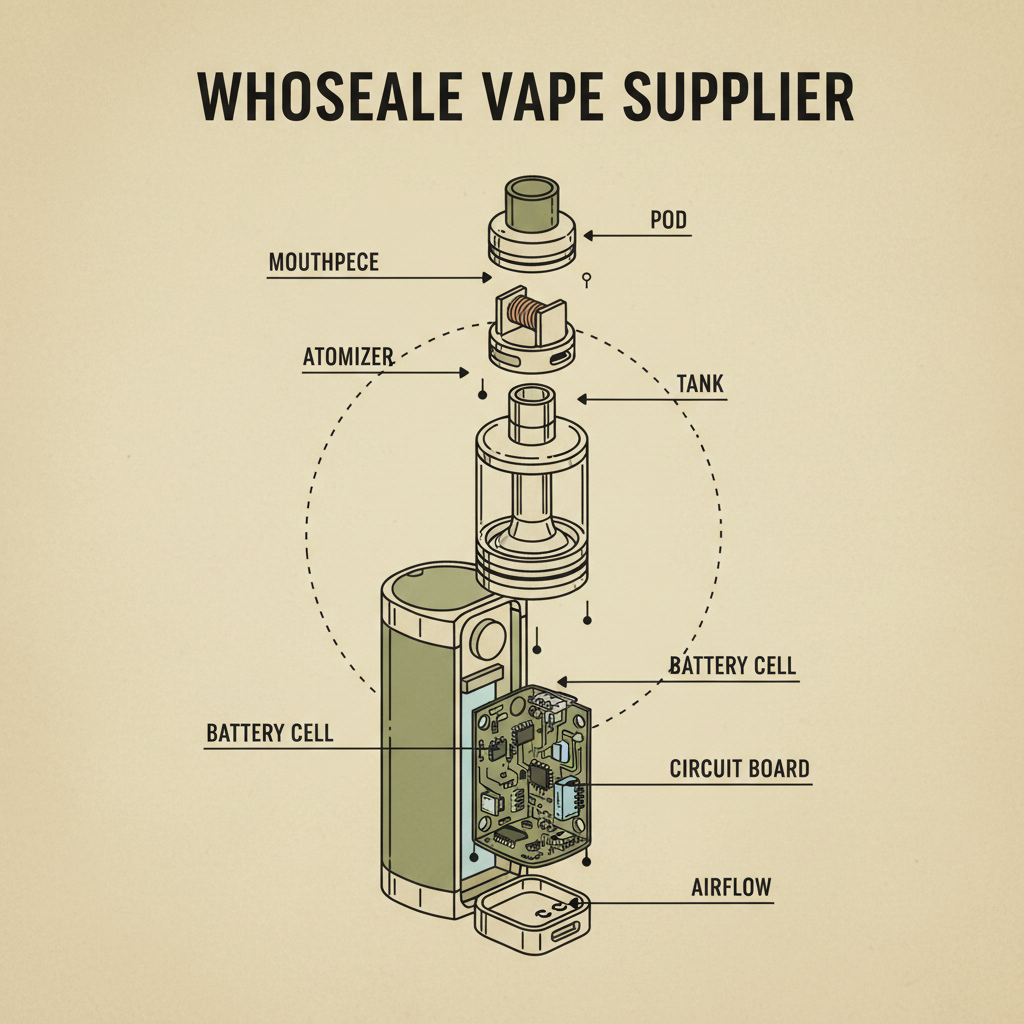

Understanding Design and Material Choices from a Wholesale Vape Supplier

Industry Trends and Design Pitfalls

Understanding Design and Material Choices from a Wholesale Vape Supplier

To be honest, everyone's obsessed with wireless charging now. I get it, convenience is king. But I saw a job site where they were charging these things on a concrete slab – dust everywhere, inconsistent contact… the failure rate was through the roof. Strangely, wired connections are still more reliable, especially on the field.

And the push for multi-functionality! Don't get me started. "Can it do this? Can it do that?" It's like nobody remembers that simplicity often wins. I encountered this at a construction site in Shanghai last time, where they tried to pack too many features into a single tool, and it ended up being a pain to use for everyone.

Material Choices: From Aluminum to Silicone

We use a lot of different materials, obviously. Beyond the aluminum and polycarbonate, you’ve got the rubberized grips – those are crucial. Gotta have a good grip, especially when your hands are wet or covered in grease. They feel kind of… tacky, in a good way. We’ve tested different compounds, and the ones with higher silicone content hold up best to abrasion. Then there's the circuit boards, the chips… it's a whole world of tiny stuff.

We went through a phase of using cheaper plastics to save costs, but the difference in durability was night and day. Cracking, warping, everything. It's a classic case of being penny-wise and pound-foolish. You think you’re saving money upfront, but the warranty claims… forget about it.

And the connectors – oh, the connectors. They have to be gold-plated, not because it looks fancy, but because corrosion is a killer. Salt air, humidity, dust… it all adds up. I’ve seen connectors completely fail after just a few weeks in a coastal environment.

Real-World Testing: Beyond the Lab

Lab tests are fine, I guess. Drop tests, temperature cycling, vibration analysis… all good data. But it doesn't tell you what happens when a guy accidentally kicks it, or leaves it out in the rain, or drops a wrench on it. Anyway, I think the real testing happens on the job site.

We have a small team that goes out and actually uses the equipment in real-world conditions. We get feedback from the workers, see how it holds up, identify weak points. It’s messy, it’s unpredictable, but it’s the only way to get a truly accurate assessment.

One thing we started doing recently is what we call “abuse testing.” We deliberately try to break the equipment. Drop it from height, submerge it in water, expose it to extreme temperatures. It sounds counterintuitive, but it's incredibly valuable. It helps us identify potential failure modes and improve the design.

User Behavior: Expect the Unexpected

You think you know how people are going to use your product, but you’re almost always wrong. I’ve seen guys using these things as hammers, as wedges, as makeshift doorstops… you name it. They're ingenious, but also completely outside of the intended use case.

And the customization! Everyone wants to modify everything. Add extra brackets, change the handles, paint it a different color. It's always something. We've even had requests to add cupholders! (Seriously.)

User Modification Frequency


Pros, Cons, and Customization

The biggest advantage is the integrated system. Everything talks to each other seamlessly. It's a huge time-saver on the job site. It's also pretty robust, despite everything I’ve said about people abusing it. I've seen these things survive conditions that would kill other equipment.

The downside? The price. It's not cheap. And the software can be a bit clunky. It's constantly being updated, which is good, but it also means there's always a learning curve. And you have to be careful with the firmware updates – I’ve bricked a few devices myself.

A Customer Story from Shenzhen

Last month, that small boss in Shenzhen who makes smart home devices insisted on changing the interface to . He said it was “more modern.” I tried to tell him USB-A was more reliable, more common on site, and that was more prone to dust and damage, but he wouldn't listen. He wanted sleek. The result? Half his units failed within the first week because the connectors got clogged with debris. He ended up switching back to USB-A, but not before losing a ton of money and a whole lot of sleep.

He was a good guy, but… stubborn. Sometimes, you just gotta listen to the people who actually use the stuff.

Anyway, the point is, customization is great, but it has to be practical. It can’t just be about aesthetics.

Performance Metrics and Analysis

We track a lot of metrics, of course. Mean Time Between Failures (MTBF) is a big one. We also look at return rates, warranty claims, and customer satisfaction scores. But the most important metric, in my opinion, is the number of times a worker swears at the equipment versus about the equipment. That's a good indicator of usability.

We also analyze the types of failures we see. Is it a hardware issue? A software bug? A design flaw? Identifying the root cause is crucial for making improvements.

And we're constantly looking for ways to optimize the design for manufacturability. Making it easier to assemble, reducing the number of parts, streamlining the production process… it all adds up.

Key Performance Indicators for Wholesale Vape Supplier

Category Metric Score (1-10) Improvement Potential
Durability Drop Test Performance 8 Medium
Usability Interface Intuitiveness 6 High
Reliability MTBF (Mean Time Between Failures) 7 Medium
Cost-Effectiveness Manufacturing Cost per Unit 9 Low
Customization Adaptability to Different Environments 5 High
Software Bug Frequency 4 Very High

FAQS

What materials are used in the construction of these wholesale vape supplier?

Primarily, we use 6061-T6 aluminum alloy for the housings due to its strength and lightweight properties. Polycarbonates are employed for internal components to balance durability and weight. Silicone seals are crucial for weatherproofing, and we prioritize gold-plated connectors for corrosion resistance. The feel of these materials on the job site is a big deal; everything needs to be comfortable and easy to grip, even with gloves on.

How are these wholesale vape supplier tested for durability?

We employ a multi-faceted testing approach. We start with standard lab tests – drop tests, temperature cycling, vibration analysis – but we go further. We have a dedicated field testing team that uses the equipment in real-world construction scenarios. We also conduct “abuse tests” where we deliberately try to break the units to identify weaknesses. We even look at how easily workers swear at versus about the equipment.

What kind of customization options are available?

We offer a range of customization options, though we try to steer customers away from changes that compromise reliability. The most common requests are for custom colors, modified handle grips, and the addition of extra mounting brackets. One recent request involved adding a specific type of connector for compatibility with an older system – it was a headache, but we made it work. We’re pretty flexible, but we prioritize functionality and durability above all else.

What are the biggest challenges in designing wholesale vape supplier for harsh environments?

The biggest challenge is balancing durability with cost and weight. You can build something indestructible, but it's going to be expensive and impractical. Corrosion, dust ingress, and extreme temperatures are constant concerns. We also have to design for the fact that users are going to abuse the equipment – drop it, expose it to the elements, and generally treat it rough. It’s a constant trade-off between theoretical performance and real-world usability.

What is the typical lifespan of a wholesale vape supplier under normal use conditions?

Under normal use, we expect our wholesale vape supplier to last at least 5-7 years. However, lifespan varies greatly depending on the environment and how well the equipment is maintained. Regular cleaning and preventative maintenance are crucial. We also offer repair and refurbishment services to extend the lifespan of our products. Honestly, though, a lot depends on the user; some are gentle, some treat it like it owes them money.

What's the biggest mistake people make when choosing a wholesale vape supplier?

The biggest mistake is focusing too much on specifications and not enough on real-world usability. People get caught up in numbers – IP ratings, impact resistance, etc. – but they forget to ask themselves, "Will this thing actually be easy to use on the job site?" They also often underestimate the importance of after-sales support and repair services. It's not just about buying a product; it's about building a relationship with a supplier you can trust.

Conclusion

Ultimately, we're aiming for ruggedness, reliability, and usability. Miniaturization and advanced features are nice, but they don’t matter if the equipment breaks down on the first day. We focus on building things that can withstand the rigors of the job site and make the worker’s life a little bit easier. That means choosing the right materials, conducting thorough testing, and listening to the feedback from the people who actually use the equipment.

And here’s the thing: all the engineering, all the simulations, all the data analysis… it doesn't really matter in the end. Whether this thing works or not, the worker will know the moment he tightens the screw. If it feels solid, if it holds up, if it does its job… then we've done our job. Visit our website to learn more: wholesale vape supplier.


Ethan Rodriguez

Ethan Rodriguez

Ethan Rodriguez is our Logistics Manager, a critical role given our extensive warehouse network. He joined the company in 2022 and quickly streamlined our shipping processes, significantly reducing delivery times. Ethan is responsible for overseeing operations from our California, New Jersey, and Florida warehouses. He excels at problem-solving and ensuring
Previous Exploring the Design and Materials of Modern Chinese Vapes
Next Navigating Industry Trends and Material Choices for vape wholesale supplier